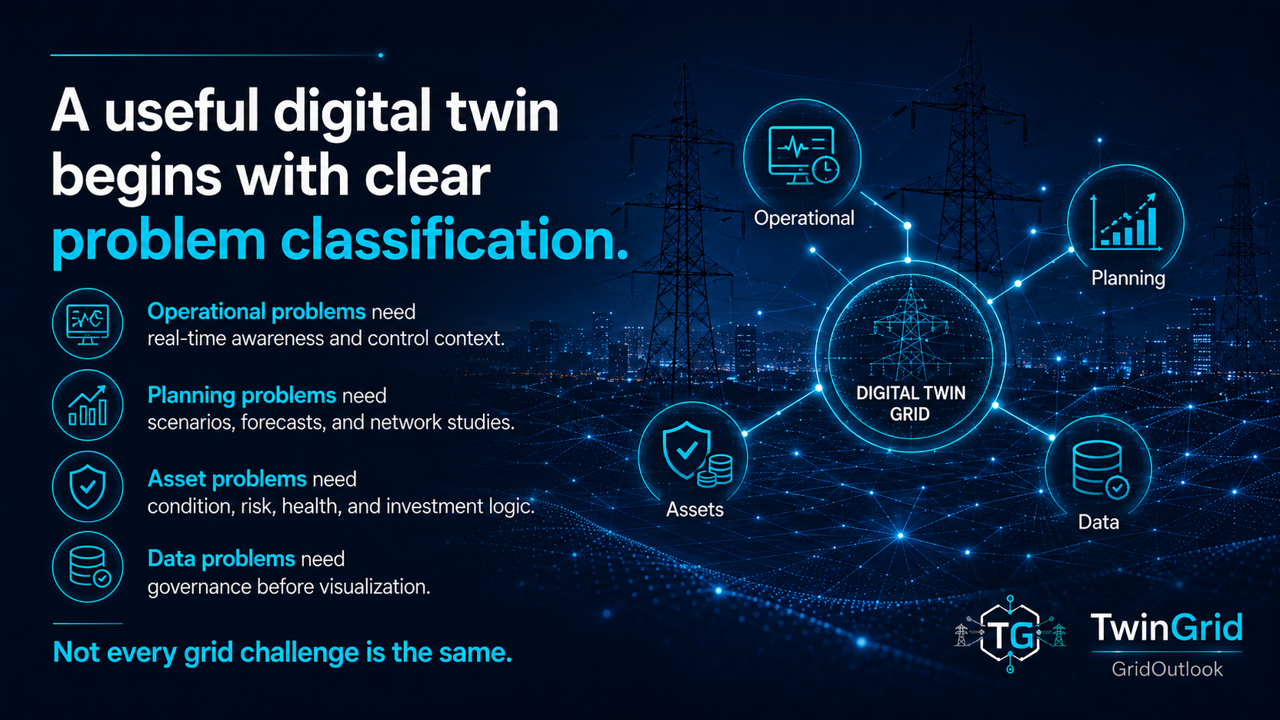
Four problem areas
Clarifies the operational, data/model, architecture, and governance gaps that utility digital twins must address.

TwinGrid helps utilities move from digital twin ambition to a governed, procureable, implementable, and maintainable capability across operations, planning, assets, data, models, IT/OT, cybersecurity, vendors, and users.
These visuals are restored from the project source set and positioned as supporting engineering visuals, not oversized hero images.
Clarifies the operational, data/model, architecture, and governance gaps that utility digital twins must address.
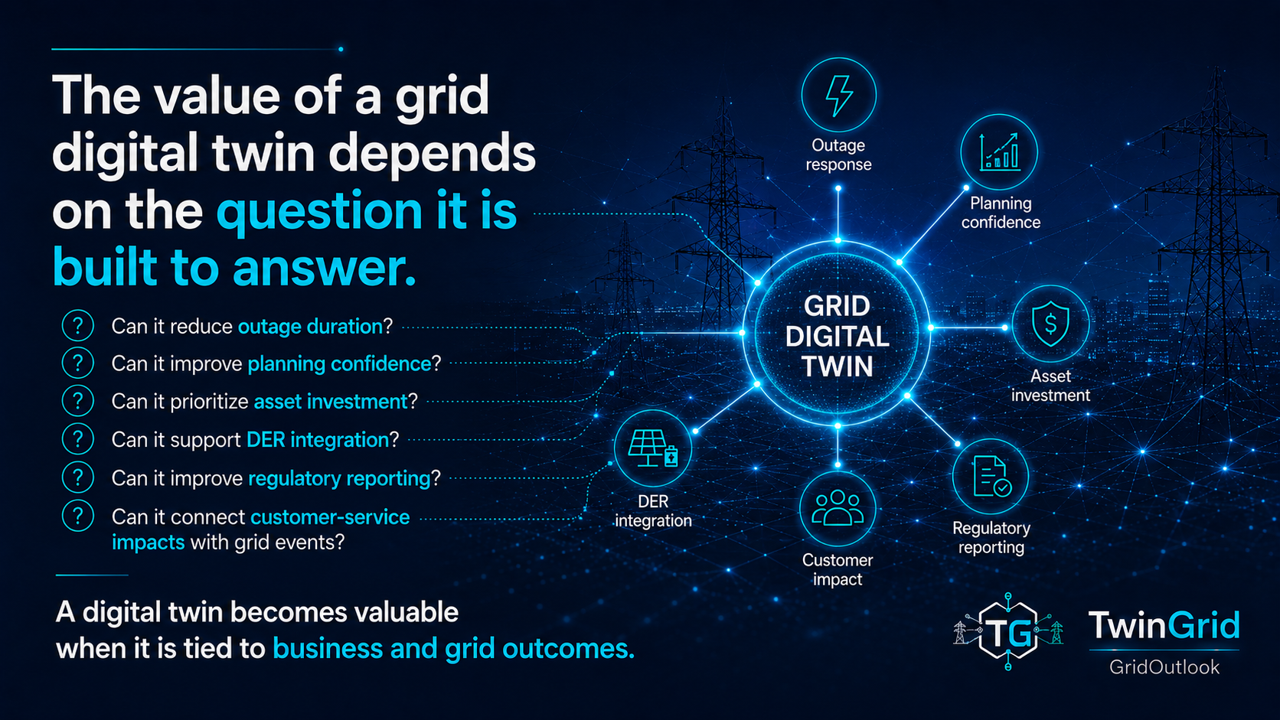
Shows how a trusted grid digital twin supports better decisions, stronger planning, improved operations, and measurable utility value.
TwinGrid introduces utility digital twin transformation through four engineering perspectives: the reality check, the framework, the architecture-to-implementation path, and the implementation risks utilities should manage. Together, these perspectives explain why a grid digital twin should begin with the utility decisions it must improve, not with software selection.
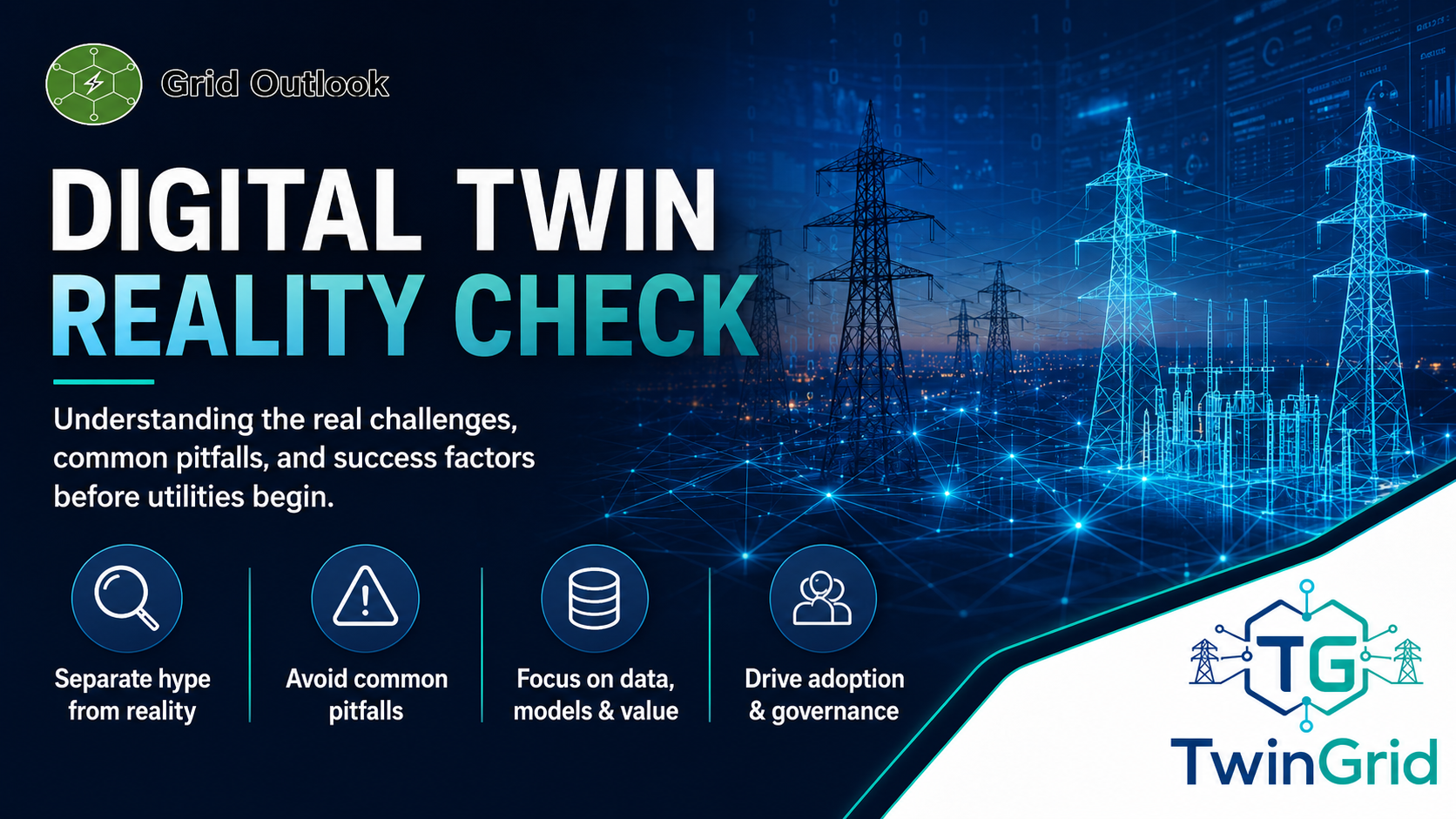
Clarifies why many utility digital twin initiatives stall as pilots or demonstrations, and why business value, model trust, governance, and adoption must be addressed before technology selection.
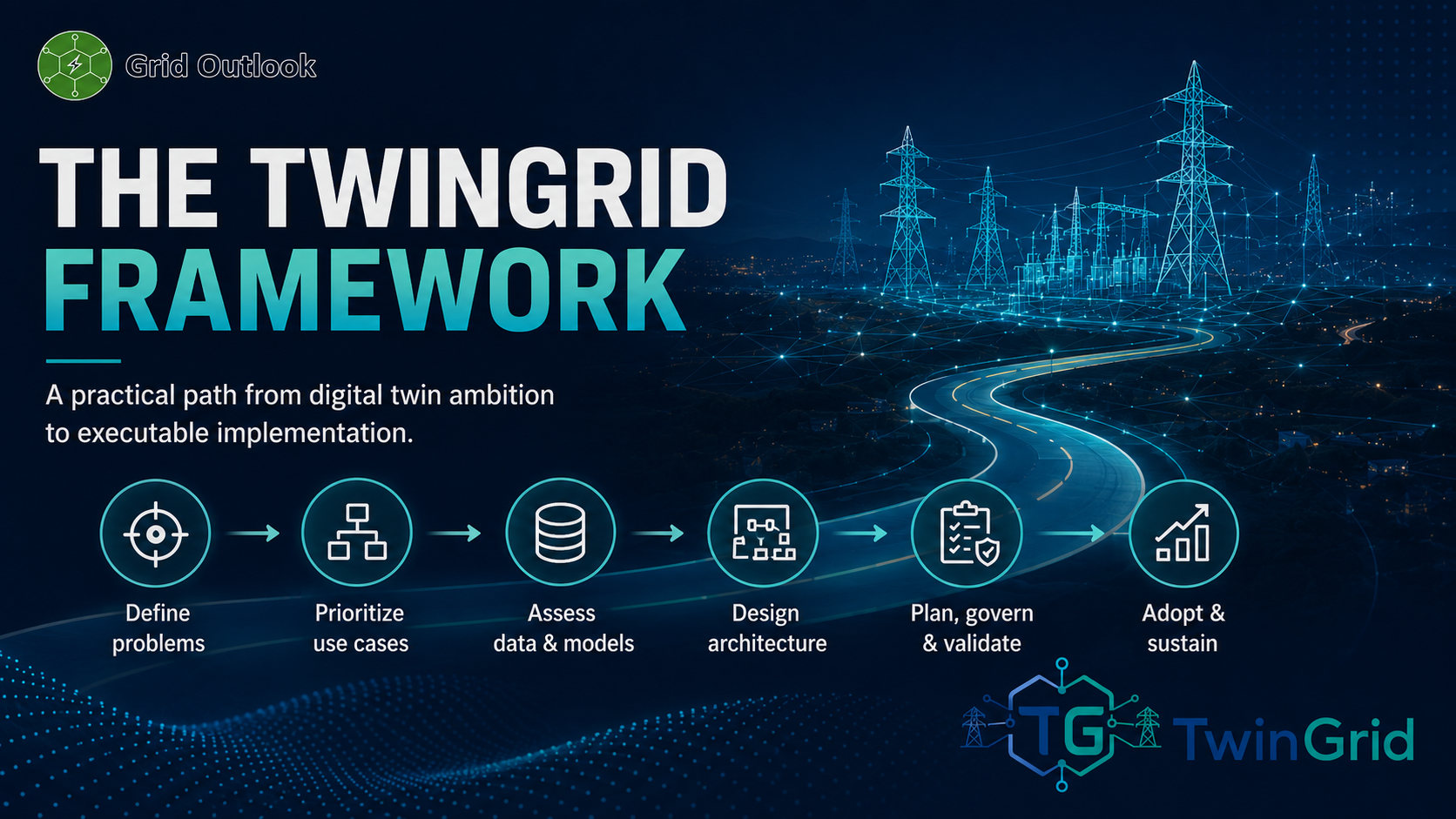
Introduces the structured journey from problem definition and use-case prioritization to data/model assessment, target architecture, procurement, implementation governance, validation, cybersecurity, adoption, and sustainment.
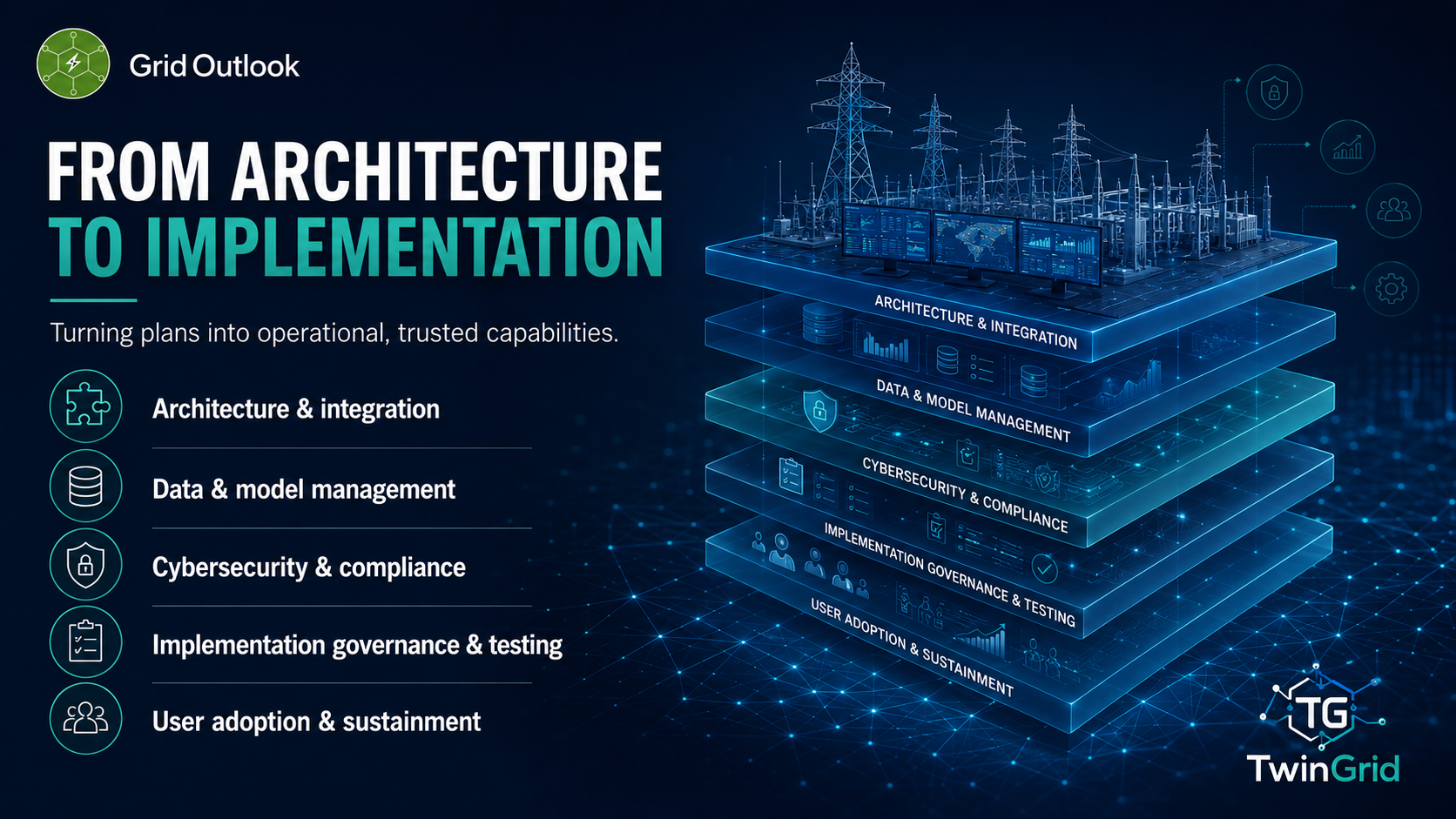
Explains how target architecture becomes real capability through IT/OT integration, data and model management, CIM, simulation strategy, RFP preparation, vendor evaluation, testing, and operating-model design.
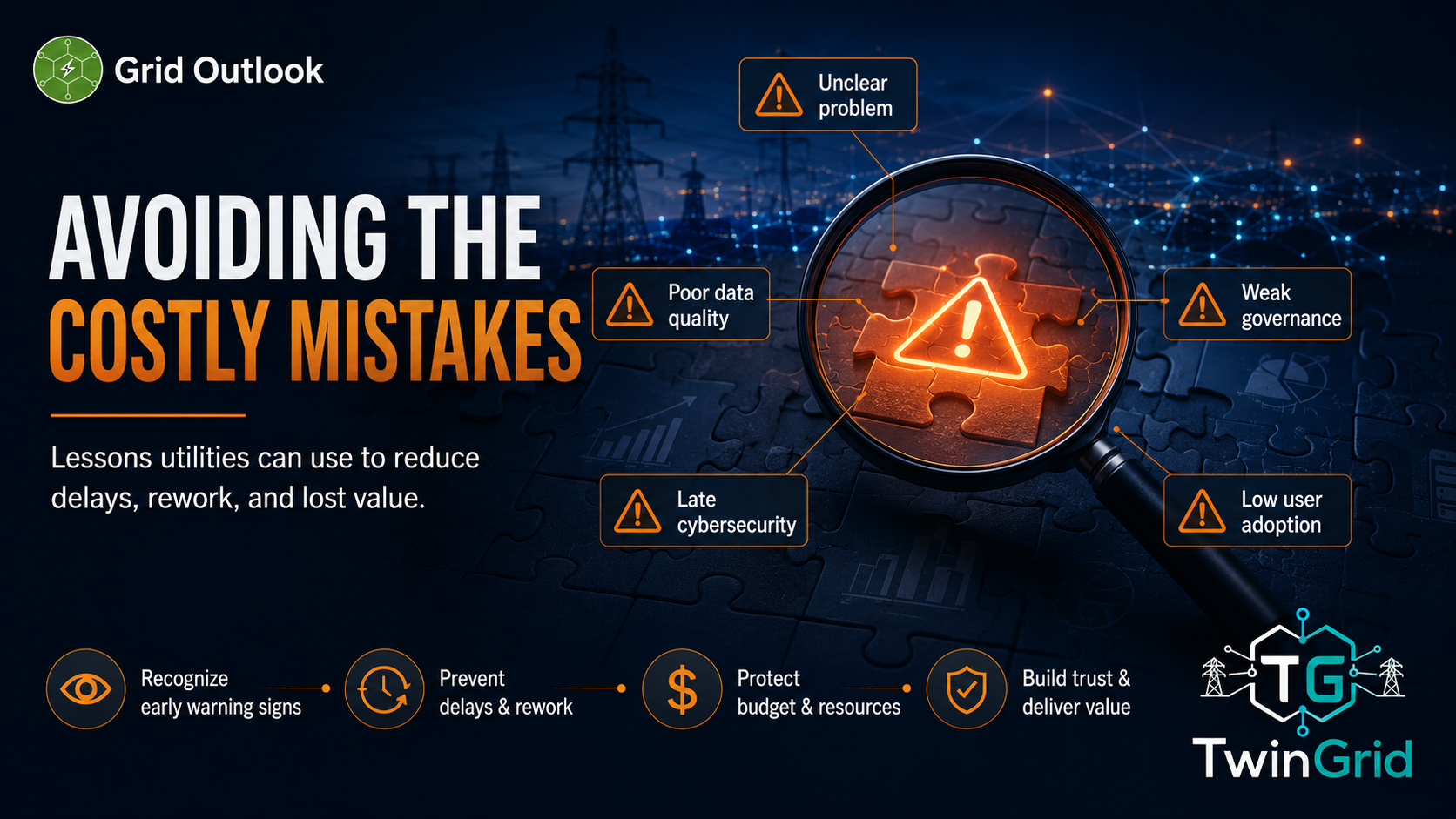
Highlights implementation risk patterns such as starting with a vendor too early, treating the twin as visualization, underestimating data/model quality, delaying cybersecurity, writing vague RFPs, and going live without sustainment.
The new website structure makes TwinGrid the core business and organizes the offer around services, architecture, and workshops.
Implementation advisory services built from the workflow: problem definition, use cases, data/model assessment, integration, architecture, sourcing, RFP, governance, validation, adoption, and sustainment.
Target architecture structure for utility digital twins: federated twins, layered architecture, source system integration, data architecture, model management, simulation engines, cybersecurity, applications, and roadmap.
A structured workshop program that aligns executives, business owners, operations, planning, assets, IT, OT, cybersecurity, data, procurement, vendors, and users.
These pages expand the consultancy service description into client-facing website sections.
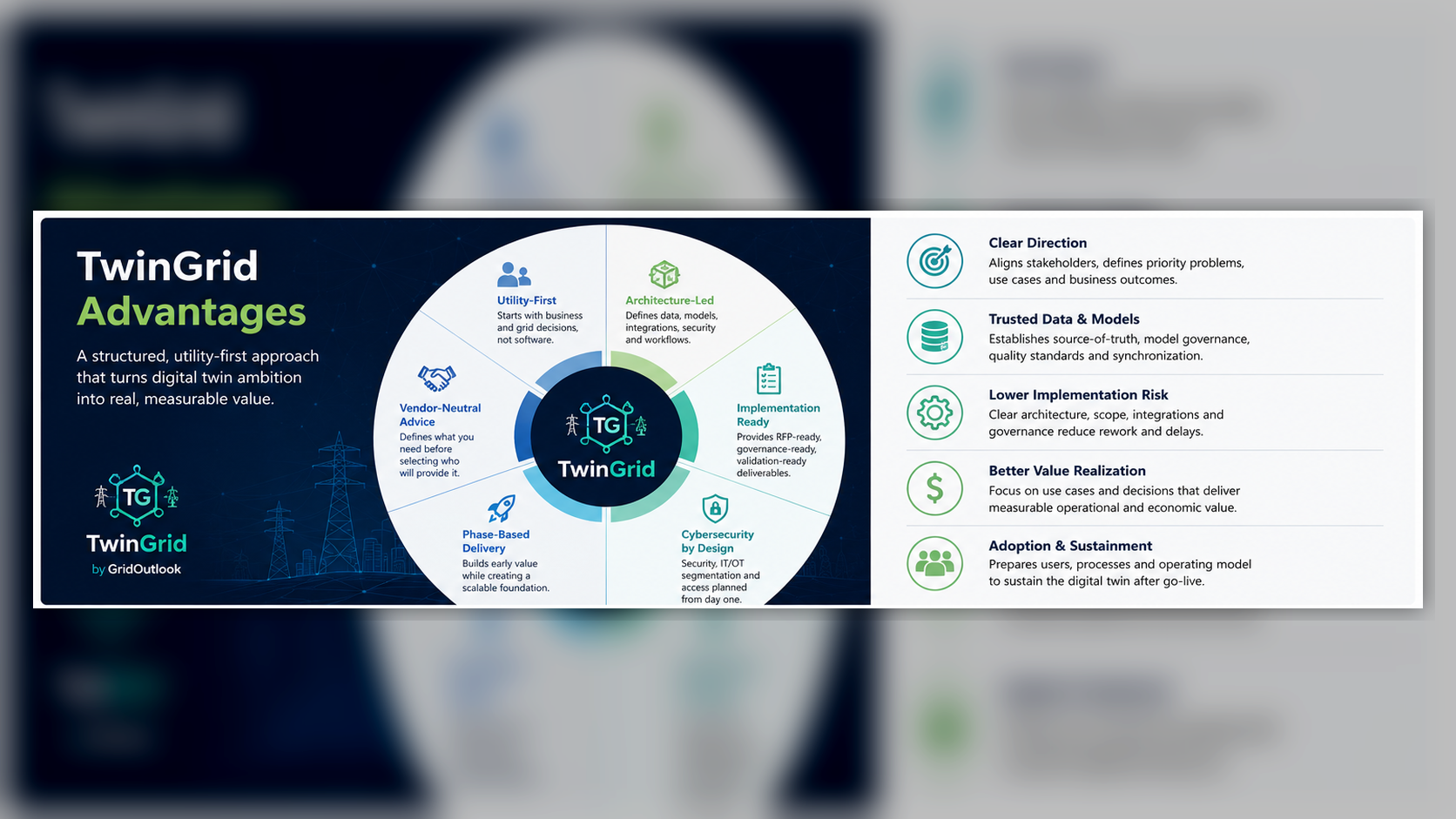
Vendor-neutral guidance, utility workflow alignment, data/model discipline, cybersecurity-by-design, phase-based delivery, procurement clarity, governance, and sustainment.
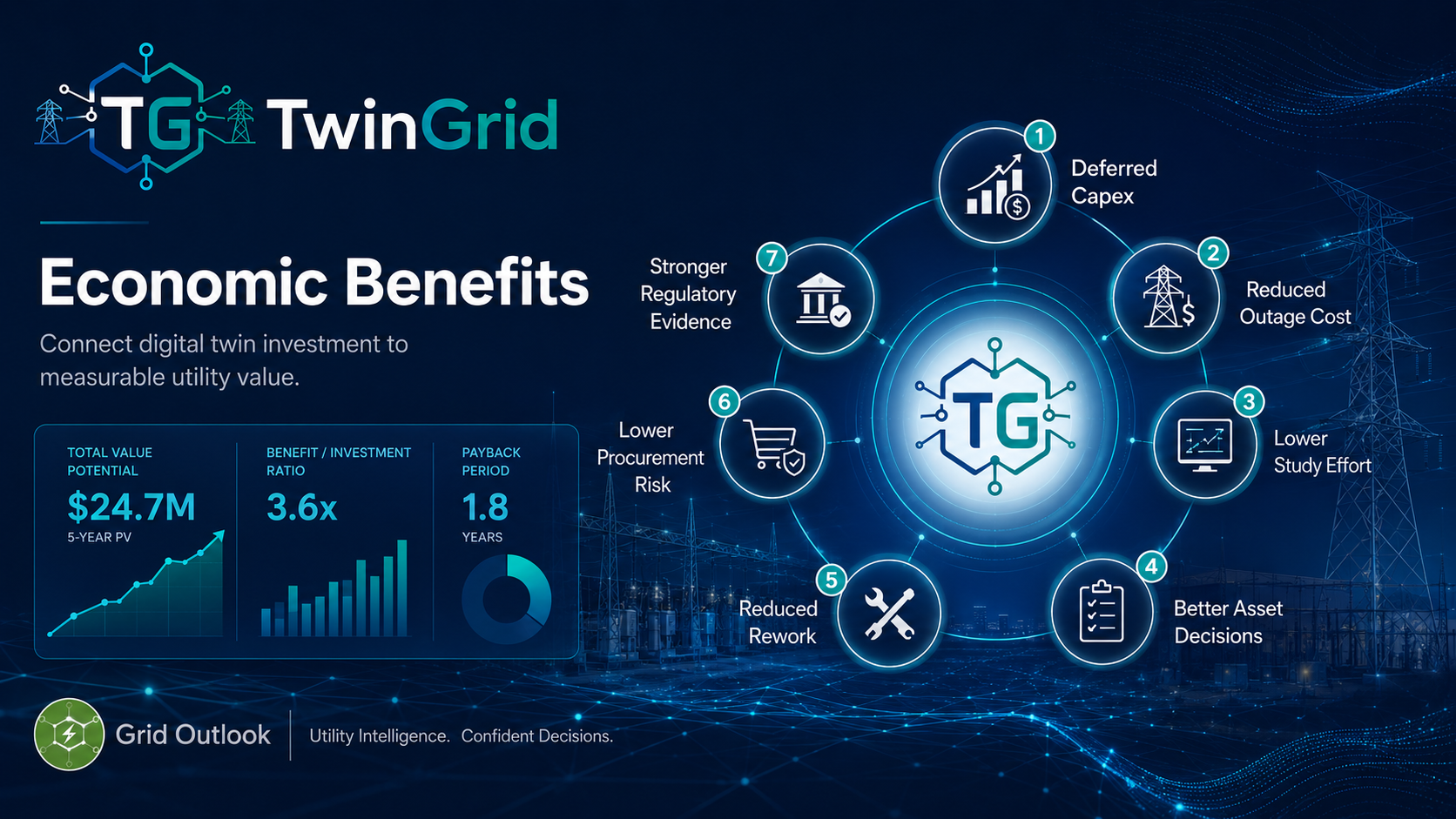
Capital efficiency, outage cost reduction, engineering productivity, asset investment quality, procurement risk reduction, and regulatory evidence.
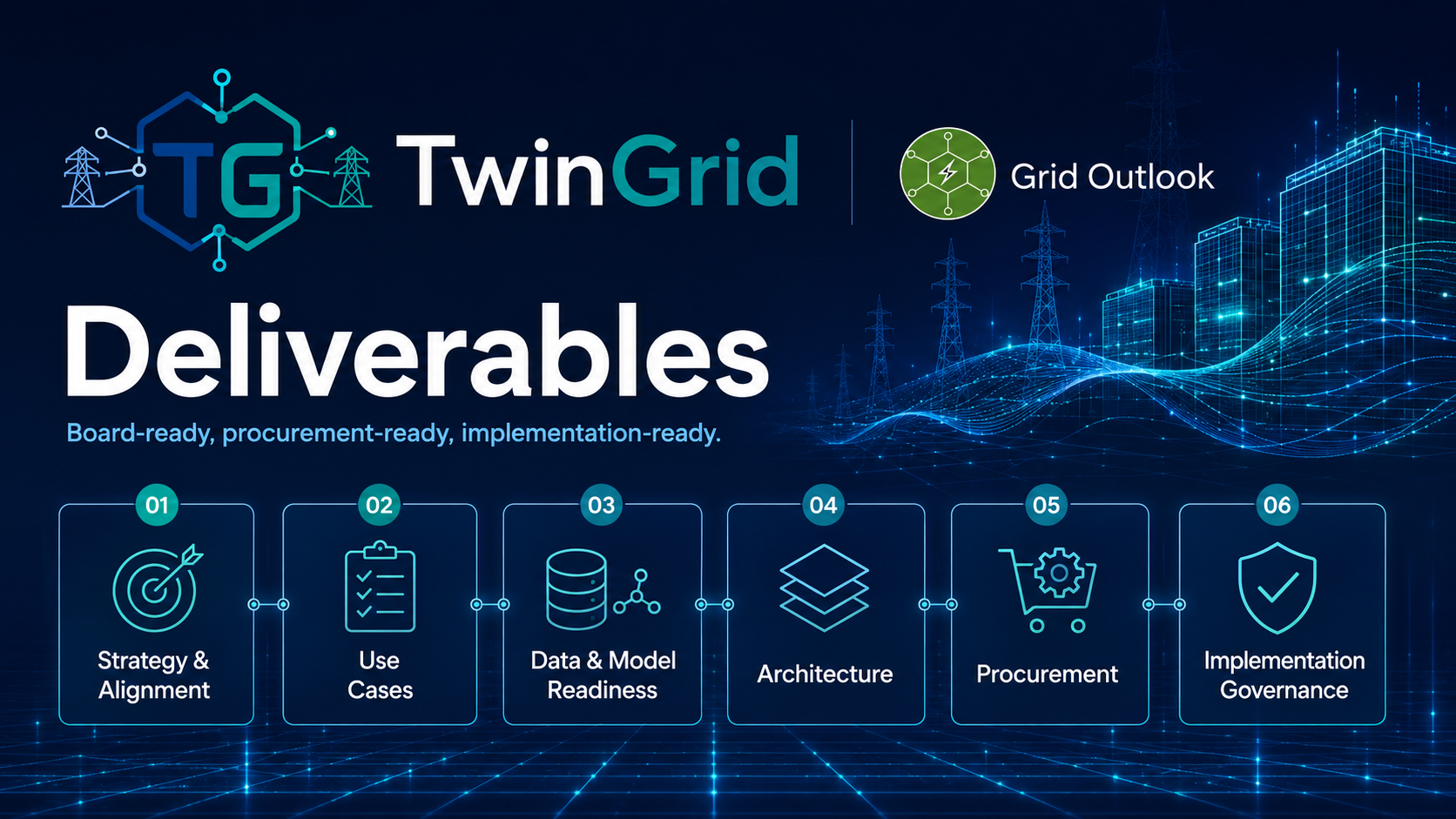
Board-ready, procurement-ready, implementation-ready, and sustainment-ready artifacts across the full digital twin lifecycle.
TwinGrid is a consulting and delivery-readiness business. It helps utilities make the right decisions before, during, and after vendor implementation.
Clarify business problems, priority use cases, current systems, data/model gaps, architecture options, and sourcing choices.
Translate the required capability into RFP requirements, vendor response templates, demo scripts, scoring models, and acceptance criteria.
Support governance, decision rights, workstreams, risk control, integration validation, model validation, and cybersecurity approval.
Define model maintenance, data governance, support, ownership, continuous improvement, training refresh, and benefits realization.
UTLF helps leadership teams align priorities, sponsorship, governance, risk appetite, decision rights, business outcomes, and stakeholder accountability.
UTEF helps convert TwinGrid and UTLF decisions into executable workstreams, milestones, roadmaps, RACI, procurement packages, controls, and adoption plans.