TwinGrid engineering perspectives

Introducing the TwinGrid point of view

The TwinGrid Engineering Perspectives explain how utilities can move from digital twin ambition to practical execution: reality check, framework, architecture-to-implementation, and implementation risks.

TwinGrid Perspective 1
Perspective 1

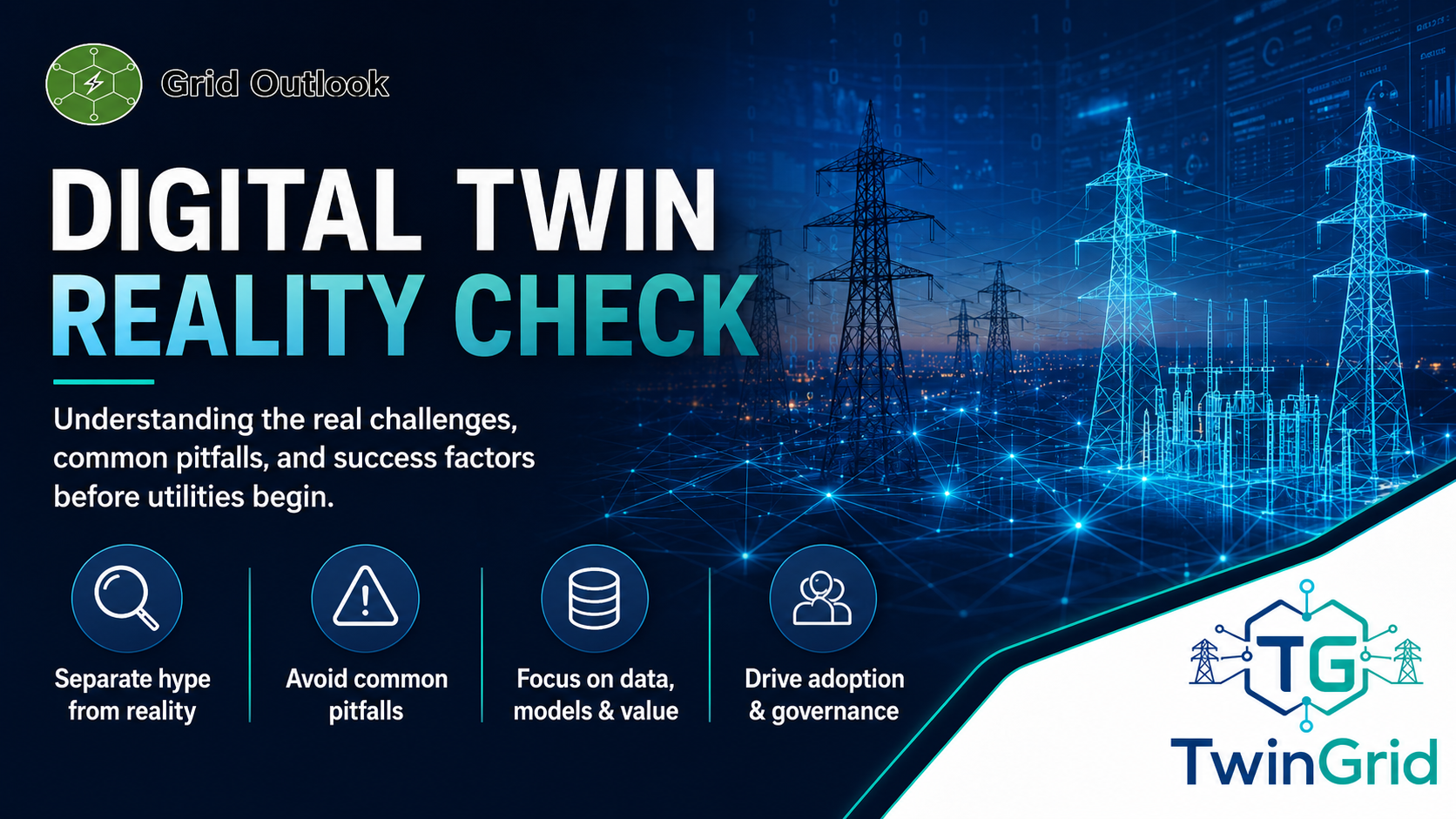
Digital Twin Reality Check

Why utility digital twin programs need business value, governance, model trust, and adoption before software selection.

TwinGrid Perspective 2
Perspective 2

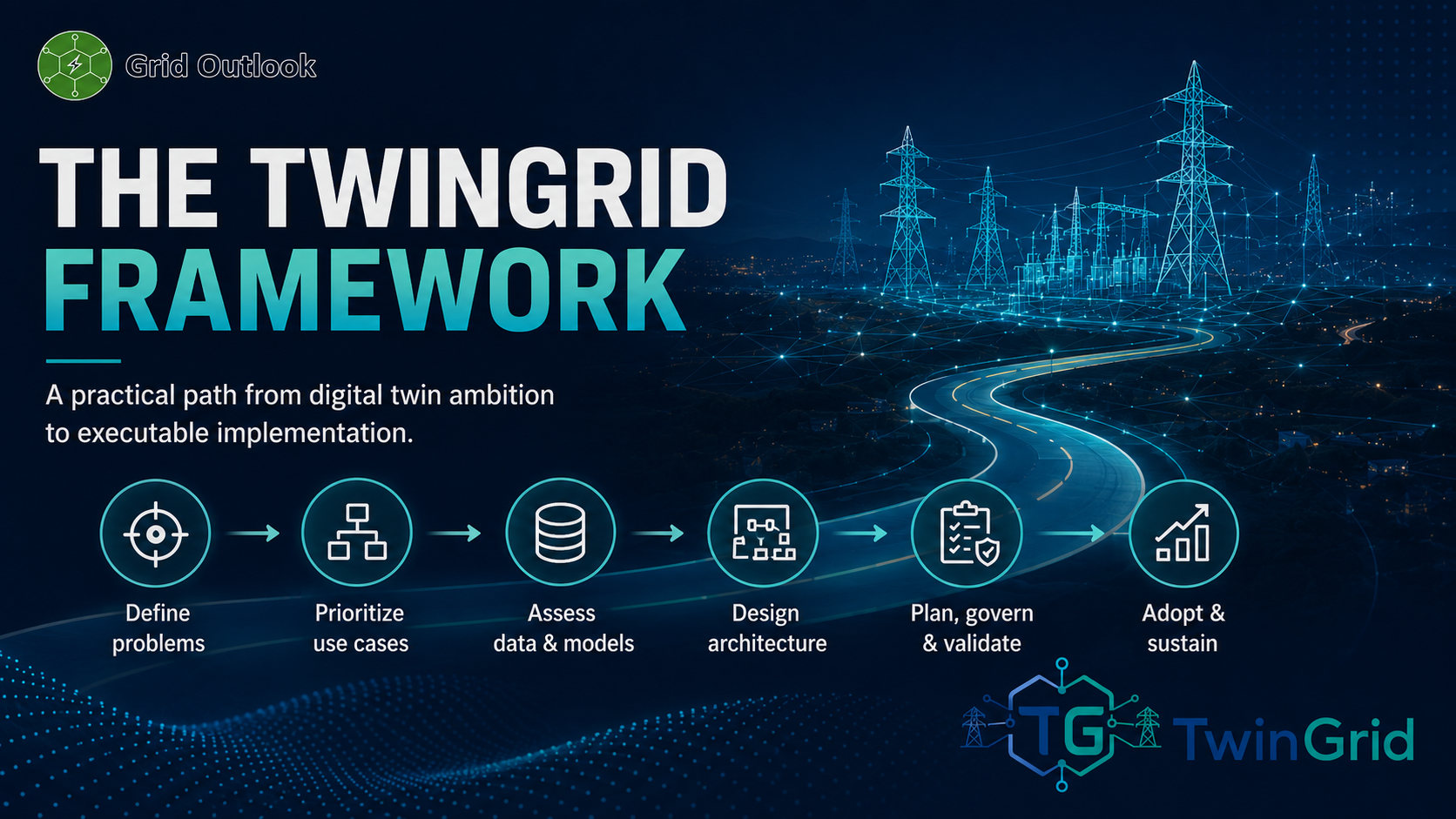
The TwinGrid Framework

The structured journey from problem definition to sustainment.

TwinGrid Perspective 3
Perspective 3

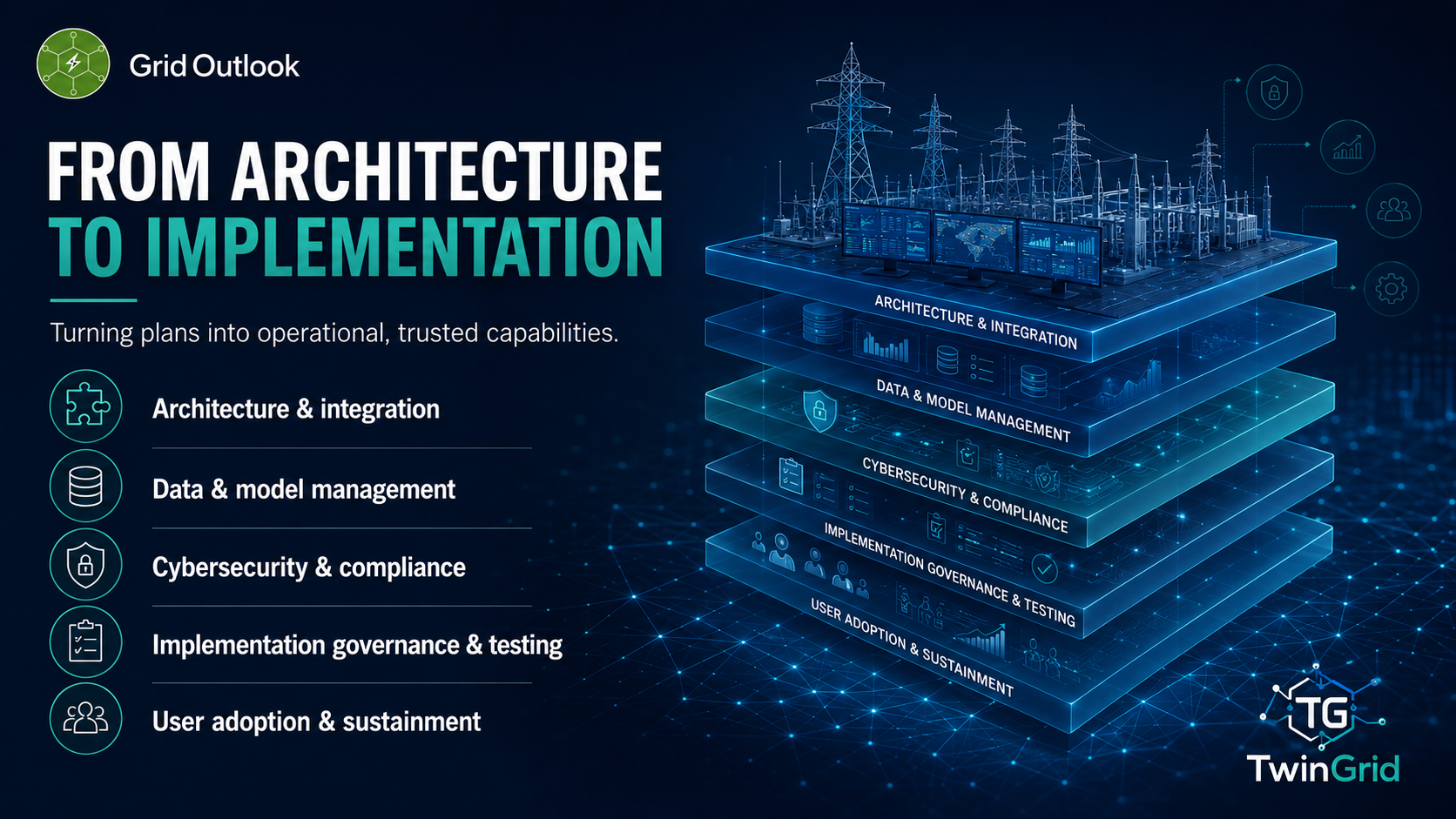
From Architecture to Implementation

How architecture becomes utility-grade implementation.

TwinGrid Perspective 4
Perspective 4

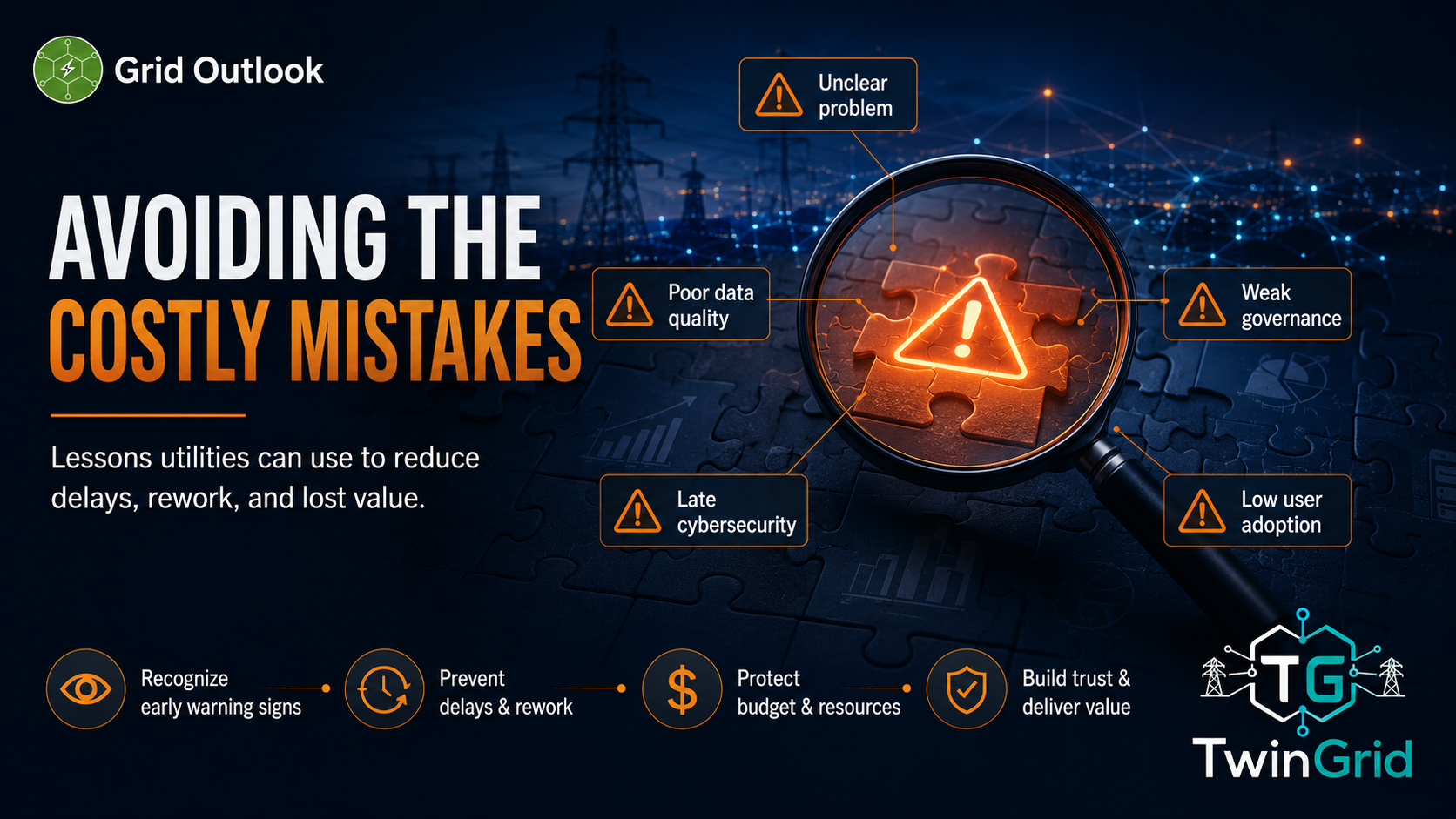
Digital Twin Implementation Risks

Implementation risks utilities should manage before major digital twin investment.

Business structure

TwinGrid first. UTLF and UTEF supporting the transformation.

The website is organized around a clear offer hierarchy: TwinGrid is the primary client-facing business; UTLF supports executive leadership; UTEF supports delivery execution.

01

TwinGrid™

Core GridOutlook business for utility digital twin strategy, architecture, implementation planning, workshops, procurement support, validation, cybersecurity alignment, and sustainment.

02

UTLF

Utility Transformation Leadership Framework: the leadership logic for aligning executives, business owners, IT, OT, planning, operations, cybersecurity, and capital governance.

03

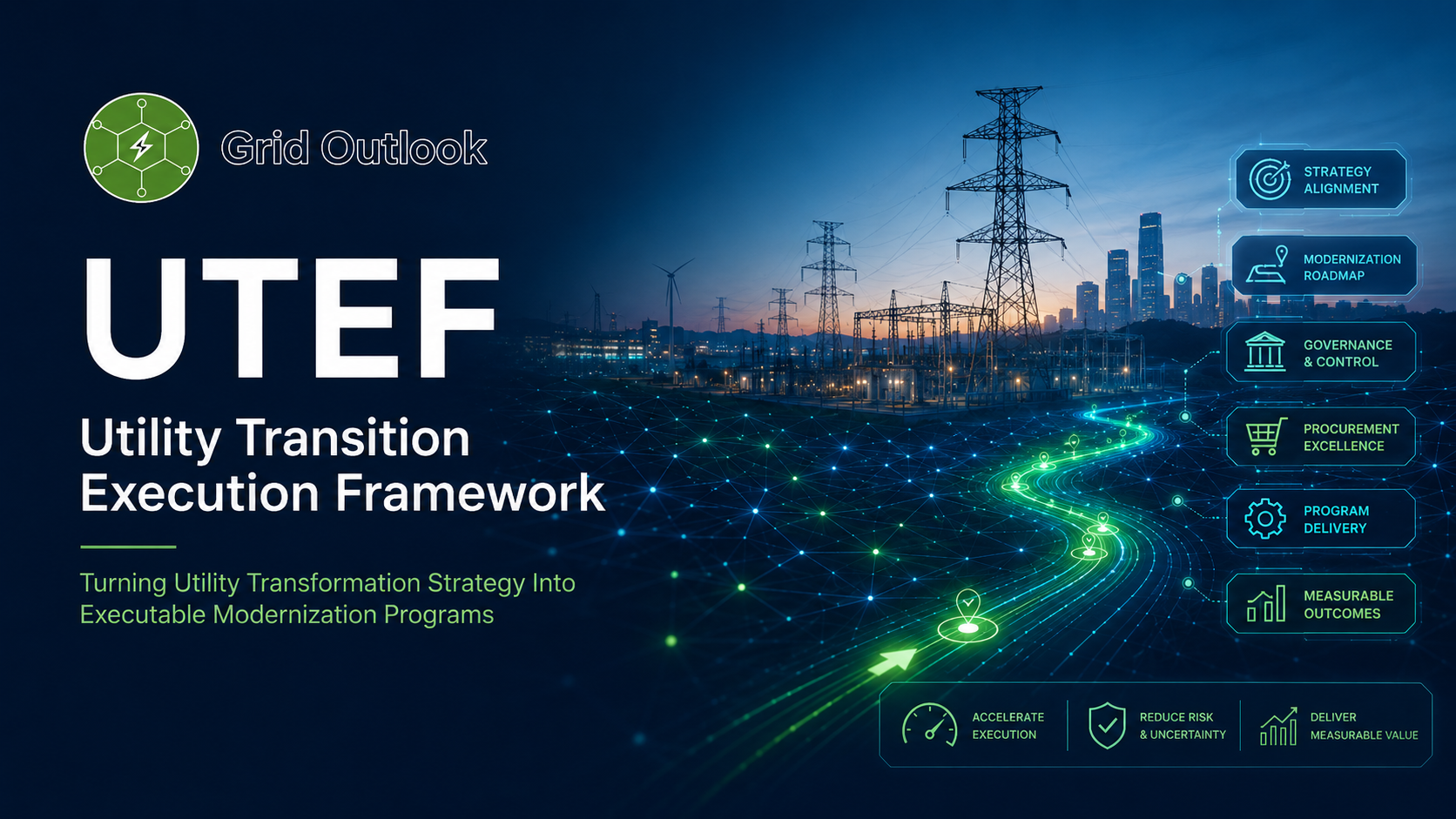
UTEF

Utility Transformation Execution Framework: the execution layer that converts strategy into workstreams, governance, procurement packages, milestones, controls, and adoption plans.

TwinGrid by GridOutlook
TwinGrid submenu

Three core TwinGrid offers

TwinGrid is now organized into three main website pathways: services from the implementation workflow, target framework architecture, and structured workshop services.

Why TwinGrid

Digital twin programs fail when they start as technology purchases

TwinGrid starts before vendor selection. It defines the decisions, data, models, architecture, governance, cybersecurity, and adoption mechanisms required for a utility-grade digital twin.

Business problem first

Clarify reliability, resilience, DER, electrification, asset, planning, outage, and operational visibility problems before committing to technology.

Model and data credibility

Assess GIS, ADMS, EMS, OMS, AMI, EAM, CMMS, historian, planning, protection, DER, and asset data before use cases depend on them.

Architecture before procurement

Define logical, physical, integration, data, model, cybersecurity, simulation, application, and workflow architecture views.

Implementation ownership

Create governance, RACI, validation, cybersecurity approval, user adoption, operating model, support, and sustainment plans.

Engagement path

From ambition to utility-grade capability

Define the problems

Frame the business, operational, planning, asset, data, model, and integration problems the twin must solve.

Prioritize use cases

Score use cases by business value, readiness, integration complexity, cybersecurity effort, adoption, and time-to-value.

Design the architecture

Translate use cases into target architecture, data flows, model lifecycle, simulation services, and security zones.

Prepare procurement

Develop RFP requirements, response templates, scoring models, demonstration scenarios, and acceptance criteria.

Govern delivery

Establish workstreams, decision rights, model validation, cybersecurity approval, user adoption, and long-term sustainment.